
Ron W. Chapman Speaks at Corizon Health Annual Statewide Conference
Ronald W. Chapman Sr., founder of Chapman Law Group, spoke on “Working with a Hostile-Manipulative Patient” at the 2019 Michigan conference.
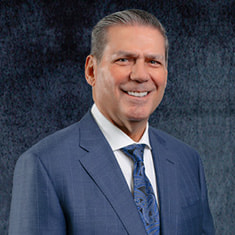
Ronald W. Chapman Sr., M.P.A., LL.M.
Founding Shareholder
President & CEO
Complex Healthcare Fraud, Qui Tam,
Uninsured Physician Matters, Compliance
All Offices – Main Office Sarasota
6841 Energy Court
Sarasota, FL 34240
Phone: (941) 893-3449
Ronald W. Chapman Sr., founder of Chapman Law Group, spoke on “Working with a Hostile-Manipulative Patient” at the 2019 Michigan conference.
Healthcare professionals in the private correctional healthcare business are often faced with lawsuits involving multiple claims. In most cases, those actions involve either a claim
As a result of the Prison Litigation Reform Act, exhaustion is no longer left to the discretion of the district court, but is mandatory, and inmates must now exhaust all “available” remedies, not just those which meet federal standards.
Many Variables are Involved in a Deliberate Indifference Claim Under 42 U.S.C. § 1983 per the 6th U.S. Circuit Court of Appeals, there are several
Defendant doctors were not deliberately indifferent under a federal court’s new test, as their medical judgment was reasonable and did not demonstrate a level of wantonness to warrant a constitutional violation.
Decedent, who had a history of mental health and substance abuse issues, died from an overdose when placed in general population.
We argued that plaintiff needed medical testimony to support the fact that the medical condition worsened as a result of the delay, and plaintiff was unable to prove so.
Our attorneys contended that the deliberate indifference claim failed because it was a mere disagreement over his treatments, and the appellate court agreed.
Plaintiff suffered a ruptured appendix, but medical experts testified the first assessment, on a Friday, was within normal limits, justifying a referral to sick call for Monday morning rather than over the weekend.
The inmate claimed several physicians failed to properly treat his MS and/or seizure disorder, but we maintained that plaintiff did not meet the criteria for MS and was simply drug seeking.
The estate of a 29-year-old inmate filed suit alleging several correctional physicians failed to properly treat epilepsy, causing the inmate’s death. The case was settled with a confidential settlement in the very low five figures.
The Court of Appeals pointed out the differences between healthcare standards of care in a traditional setting and in a correctional setting, noting that there are extra concerns in the correctional setting.
Our medical malpractice defense attorneys argued that if the healthcare provider diagnosed and ordered surgery one day earlier, the probability of the outcome being different was low.
Plaintiff, who had Type II diabetes, claimed that Lantus was discontinued and NPH 70/30 administered to save money with no legitimate medical purpose.
Ronald W. Chapman Sr., M.P.A., LL.M.
Founding Shareholder
President & CEO
Complex Healthcare Fraud, Qui Tam,
Uninsured Physician Matters, Compliance
All Offices – Main Office Sarasota
6841 Energy Court
Sarasota, FL 34240
Phone: (941) 893-3449
Ronald W. Chapman Sr., founder of Chapman Law Group, spoke on “Working with a Hostile-Manipulative Patient” at the 2019 Michigan conference.
Healthcare professionals in the private correctional healthcare business are often faced with lawsuits involving multiple claims. In most cases, those actions involve either a claim
As a result of the Prison Litigation Reform Act, exhaustion is no longer left to the discretion of the district court, but is mandatory, and inmates must now exhaust all “available” remedies, not just those which meet federal standards.
Many Variables are Involved in a Deliberate Indifference Claim Under 42 U.S.C. § 1983 per the 6th U.S. Circuit Court of Appeals, there are several
